Førtifem
Both previously working as graphic designers they decided to join their skills under a common name in 2012. Focusing on illustration, mostly on paper and working with four hands, from this union emerged a style midway between striking tattoo drawings and detailed ancient engravings.
"These 170 months under the name Førtifem have allowed us to forge unbreakable bonds with artists from all over the world, whether they are still struggling to fill tiny basement venues or shaking entire Zénith arenas.
Every collaboration feels like a small miracle: once you move beyond the barriers of the powerful, the violent, or the abrasive, what emerges is the precious discovery of vulnerable and deeply endearing souls. Together, we merge our respective aesthetics, cultures, and craftsmanship, with the immeasurable honor of giving visual form to their music.
Here, alongside the Belgian band Amenra and their Church of Ra, we created a timeless stained-glass piece.
Working with visual codes and shaping the myth itself, in order to embody that feeling of brotherhood within solitude, the harsh fire of passion, and the empty skies of melancholy.
Destiny will unite us - friendship is stronger." Førtifem
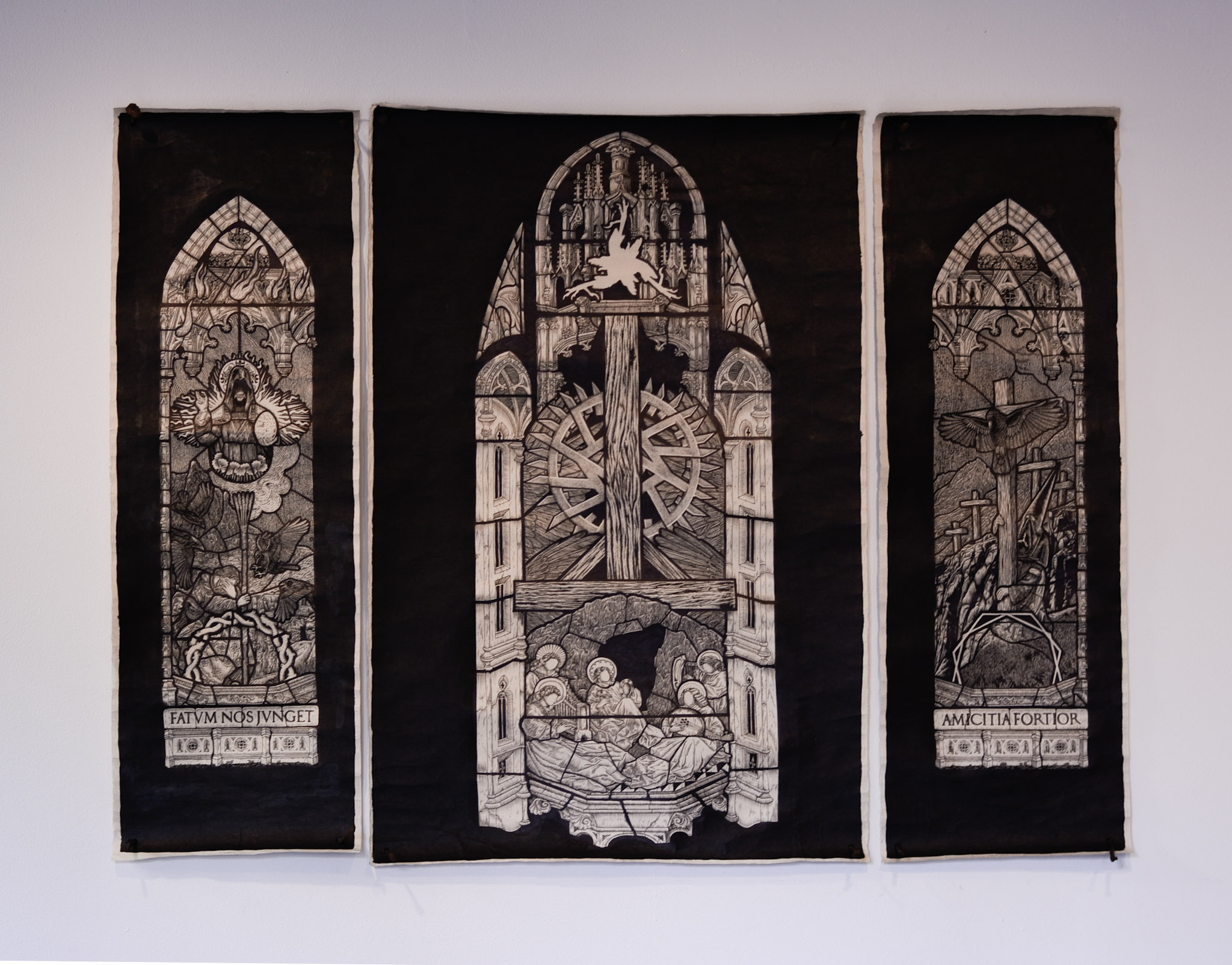
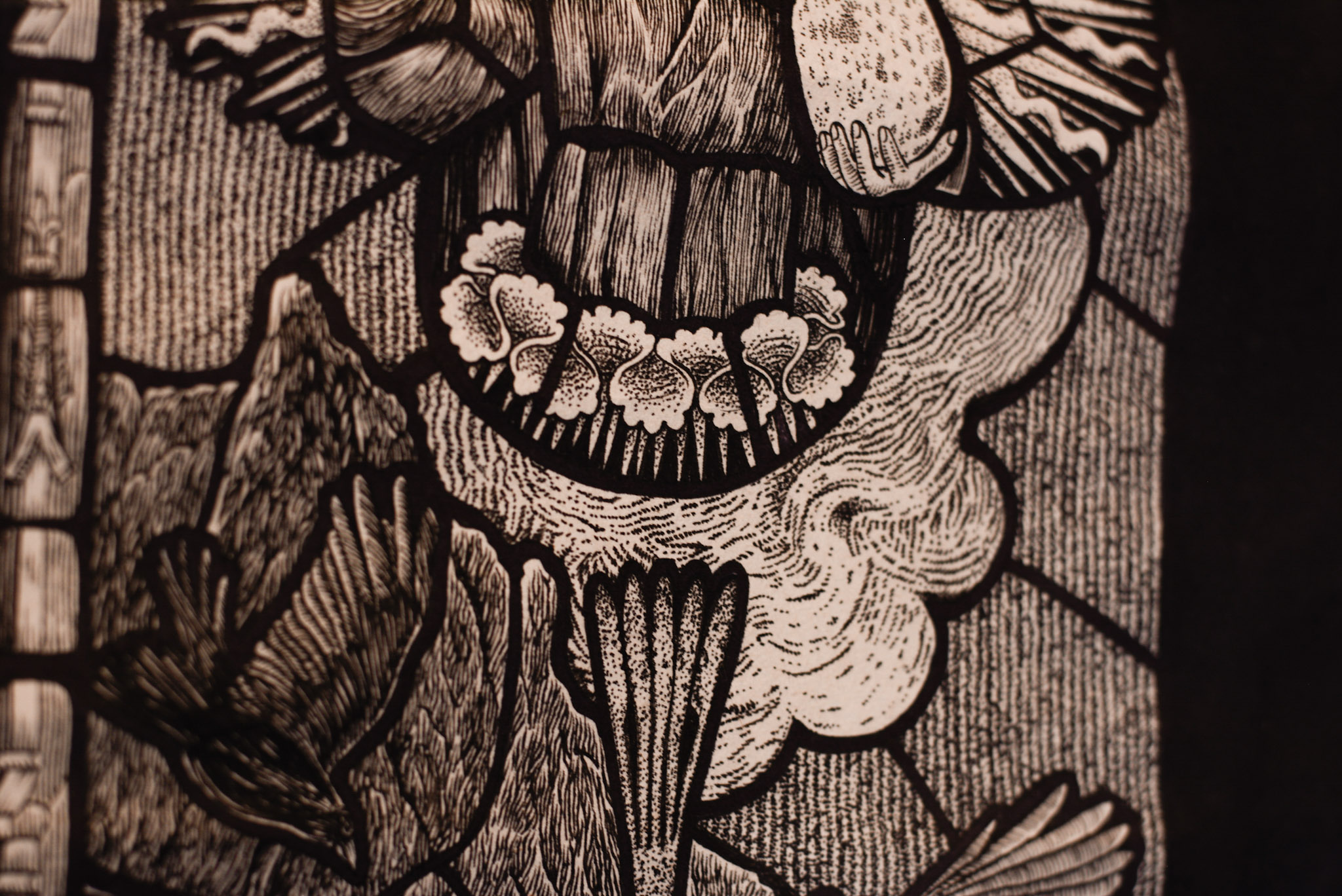
photo : Zohra Mrad
Ghas Attack
Using hand-drawn graphics, photocopy and DIY reproduction technique, he considers his work not as art but rather as visual communication, aimed at instigating collective reflection.
“I was always fascinated with album cover visuals growing up - this directly inspired my current work. I later became obsessed with early to mid 20th century propaganda posters - a style I adopted in DIY form, using photocopy and analog techniques to convey socio-political, environmental and economic messages.
These inspirations were consolidated and amplified by punk.” Ghas Attack
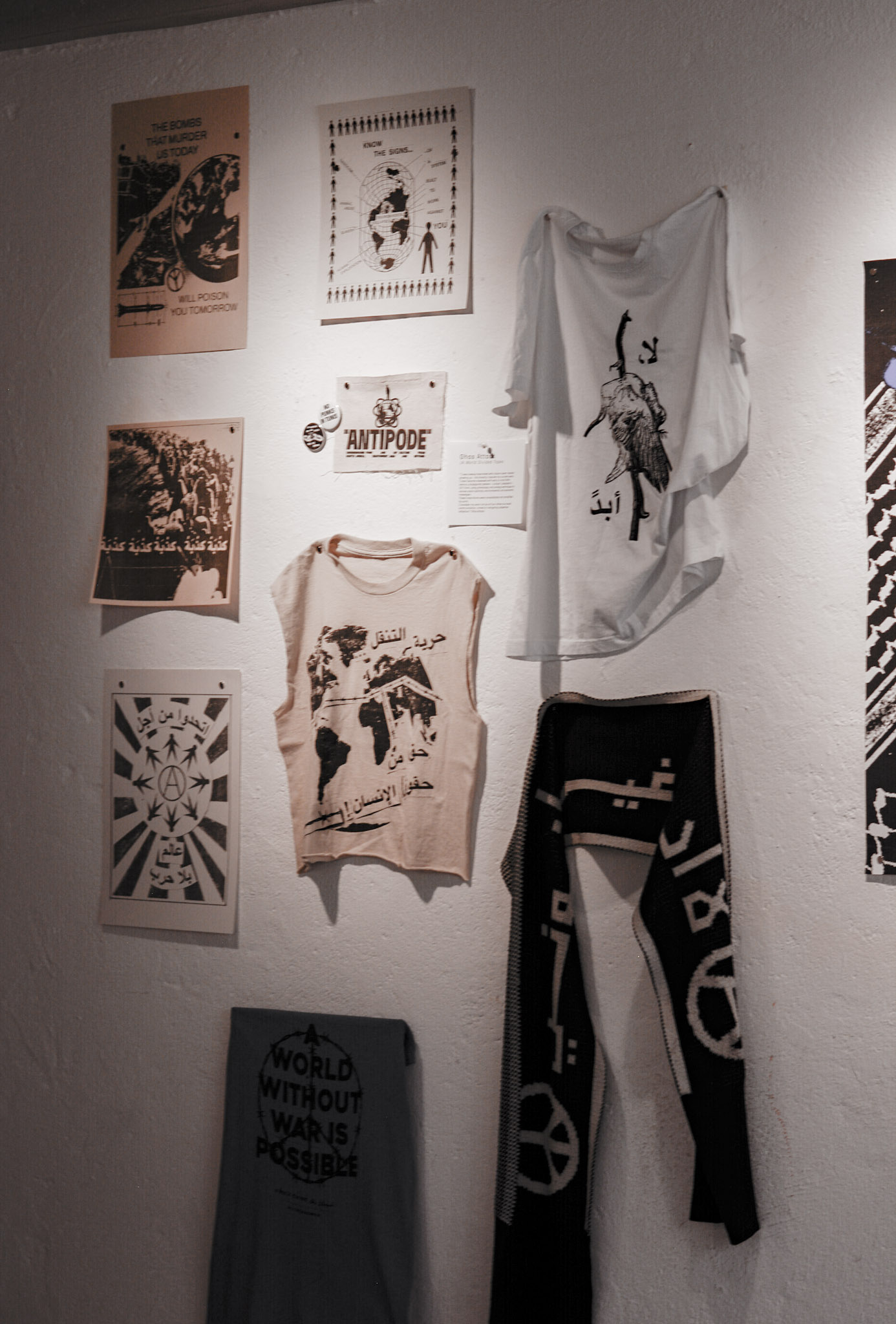
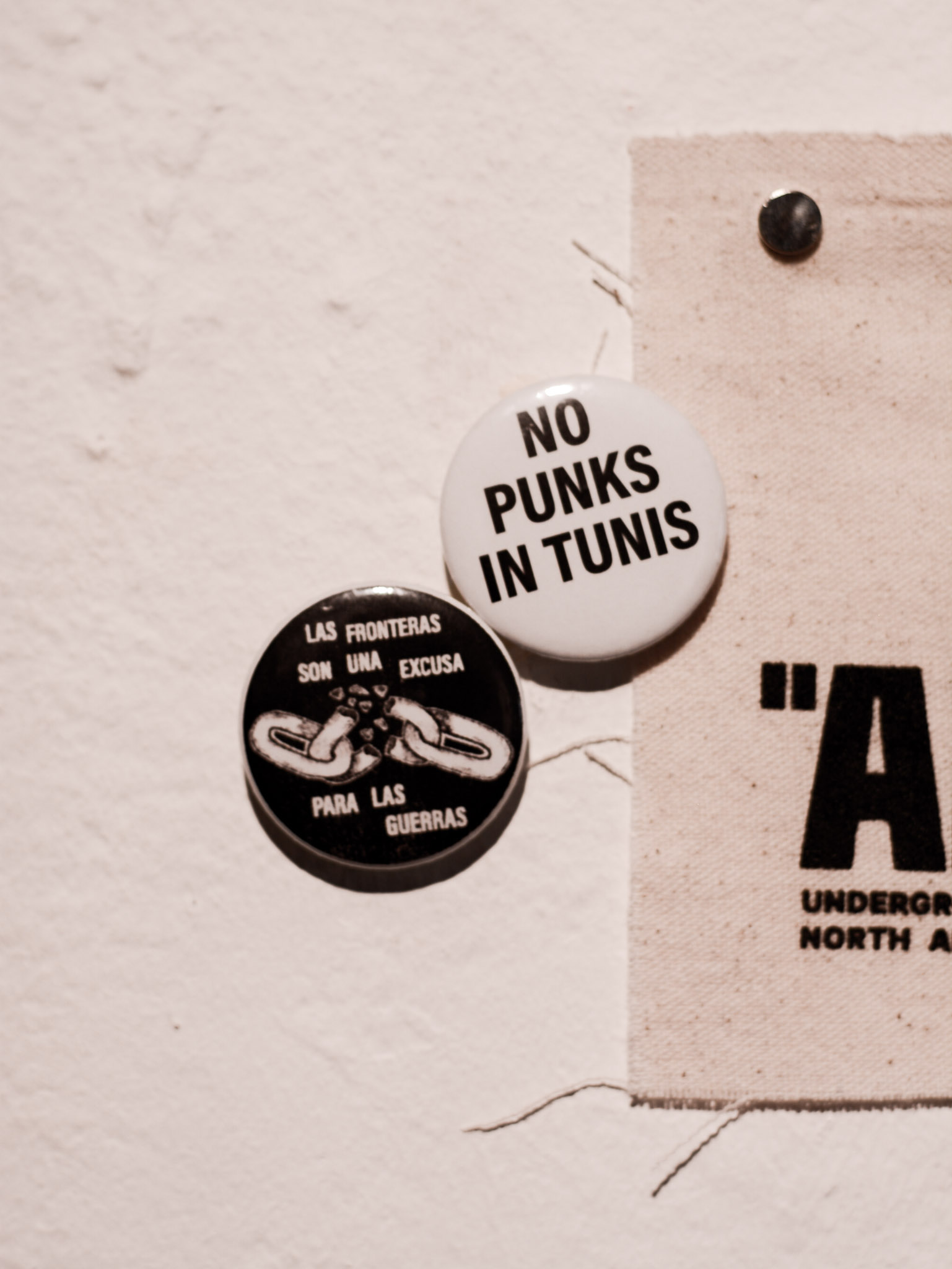
photo : Zohra Mrad
Kim the Butcher
Born and raised in rural Luxembourg, early inspirations by snowboarding and skateboarding visuals, follow by record covers and a butcher shop.
Visually drawn towards darkness, trash and inperfection.
Love for fast processes and nervous music.
Solidarity is key.
Black and white illustrations with a heavy dose of ‘fuck you’ to fascism and ‘the man’. Our good friend Kim, AKA kim! ‚the butcher‘ schreiner brings a totally unique and vibrant graphic to the new Slash Happy Place snowboard. An incredibly talented artist, Kim makes the sickest Zines, which put him on Gigi’s radar for a board graphic.
Kim’s art is bold and his graphics take inspiration from his true love - snowboarding and punk rock album covers. He’s worked with a number of snowboard companies in our space, and skulls are a standout feature in Kim’s work. Growing up in a butchers, Kim’s DIY approach to art and design harks back to his days surrounded by carcases and dead animals. Thank you death!
Kim works 9-5 as a graphic designer for a big corporation, so when he gets to sit down in the evenings and unleash skulls and middle fingers on his art, he’s like a pig in shit.
Growing up in the flatlands of Luxembourg, Kim cut his teeth snowboarding in Austria in 1991, and the rest, as they say – is history. “The little tickles of fear,” Kim says got him hooked on shredding and then “friends and banter, the stickers, the look and feel, the artworks, the subculture and nature,” is what’s made snowboarding his raison d’être.
In a world where sales dictate snowboard graphics, we’re stoked to have let Kim go wild on this piece. Taking inspiration from his macabre side, Kim says with this graphic he drew “more from a spiritual side, like fertilizing the ground, endless circle, birth, life, death. Skulls always smile,” Kim confirms, noting his Happy Place is darker than others, so he incorporates a thistle, “it shows resilience and resistance, mimicking my darker side. I still chose this place. Not everybody enjoys a Happy Place on its own so you have to create your own places that make you happy.”
Kim’s final word to snowboard shops and everyone reading this on the internet… “Death to fascism and stop scrolling."
" As reported by his snowboard brands catalogue
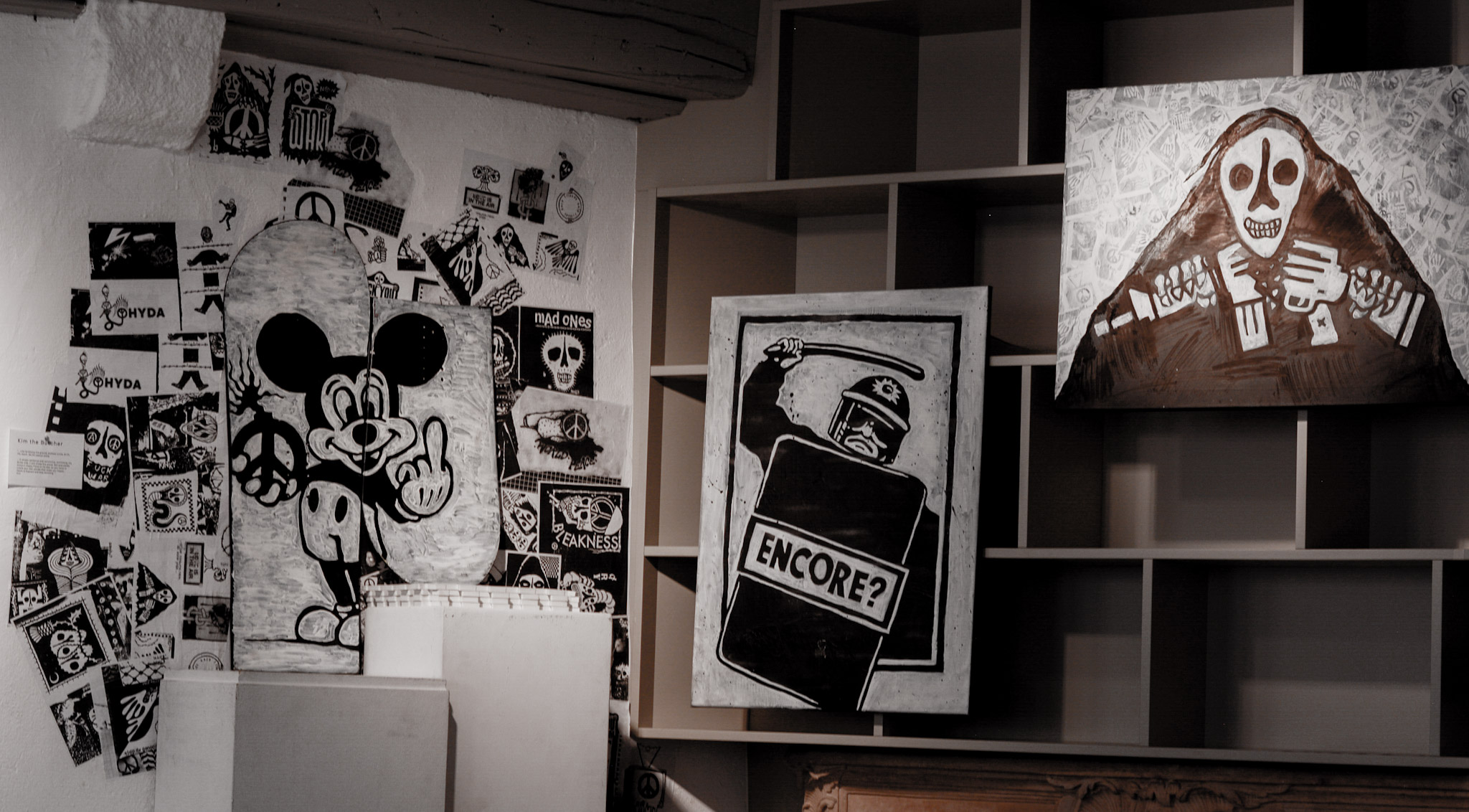
photo : Zohra Mrad
Nadia Zarrougui
Her work develops through both digital and manual processes, where each gesture becomes a trace of transformation.
She has exhibited in Tunisia at the National Library of Tunisia (2014), the Kamel Lazaar Foundation during Jaou Tunis (2017), the Centre des Arts Vivants (2019), and El Birou Gallery (2020). She received first prize for the postage stamp project Indigenous Seeds and Food Sovereignty in Tunisia (2019) and the “Favorite in Graphic Arts” award at the Chouftouhonna Feminist Art Festival (2017).
Alongside her artistic practice, she collaborates on editorial and musical projects, including illustration for Entre-pôles (Inkyfada, 2022), and visual works developed with artists such as Caged Bastard, where image extends the language of sound.
" I can cross storms, and I can also become a slave to the vision of “creating a scene,” a local one, to listen and watch for an hour a band where the drums are highlighted, witnessing the game with time, like a master controlling it, controlling milliseconds, delivering sounds people sweat for.
But this is where my relationship with sound begins: in the difference between choosing to hear and being forced to hear.
We can choose to hear a bird, or let it disappear into the background. We can decide whether to return to a sound again or not. We can write things and choose not to read them, not to hear our own voice repeating our own text, or we can read them, record them, and mix them with the bird, or not.
Sound becomes a space of decision, a space where we choose what belongs to our attention. More choices, more freedom, more coping mechanisms. The possibility to decide what enters your attention, what stays, what fades away, and what becomes part of you.
I think my relationship with sound began on my island. Every summer, if you are at home, you risk hearing drummers from local troupes in repetition. This sound is collective, almost allowed. You can hear your neighbor’s decision to become a drummer / tabbel through the way he occupies the afternoon with his instrument. The sound is not necessarily annoying, but it is.
And yet, when you meet him in a troupe and hear him trained, ready to enter the field of performance, and you watch them playing the soundtrack of your childhood, you begin to feel that you belong to that sound, once annoying, now becoming memory, becoming hustle. “ Nadia Zarrougui
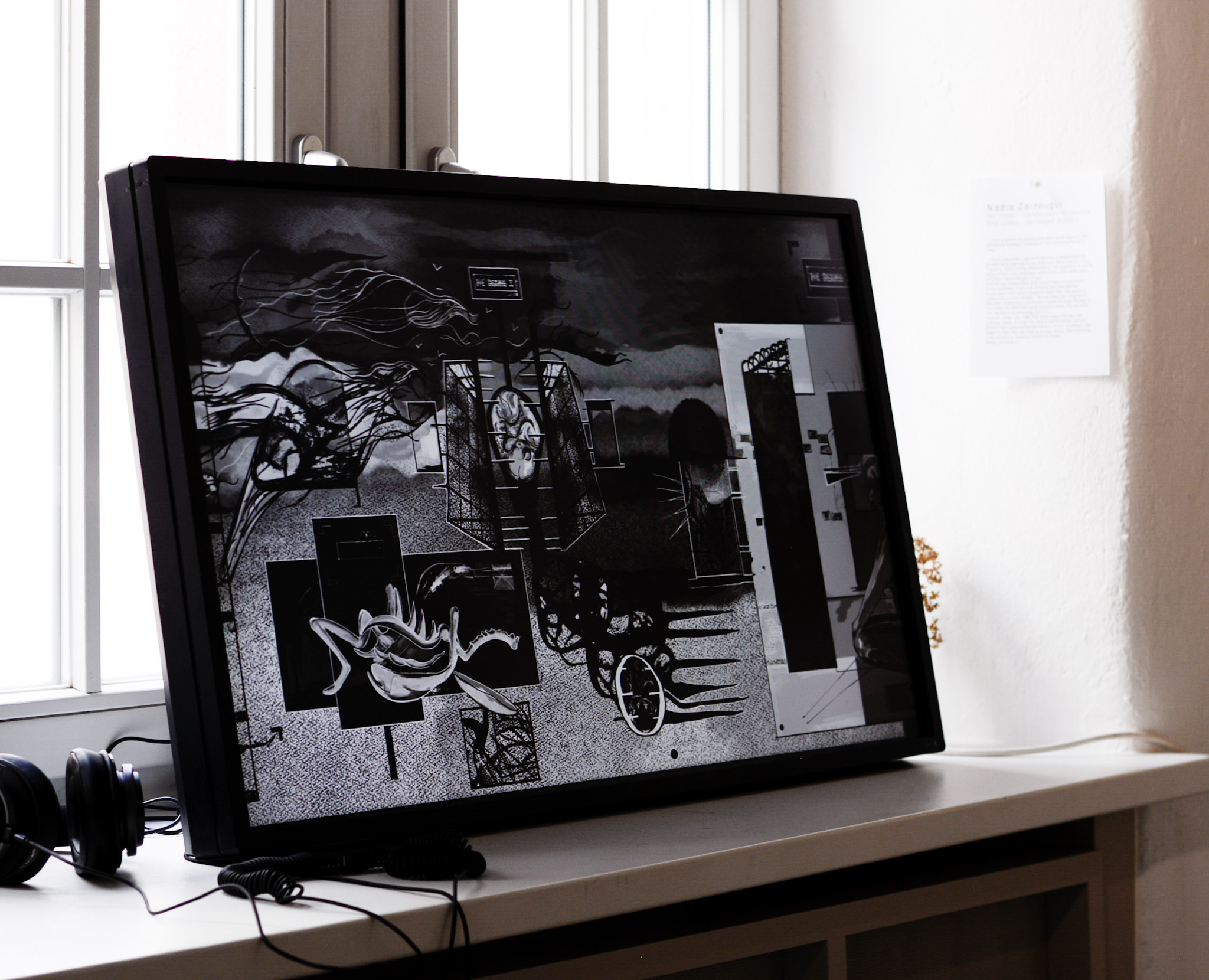
photo : Zohra Mrad
Nuke
Tanuki-bayashi
Based in France’s Grand Est region, after a decade of taking care of artwork and videos (clips, live recordings) as part of Belgian label Badass Yogi Prod, he discovered the world of Francophone micro-publishing, finding himself on the path of pencils and more personal creations.
Within this microcosm, encounters with Aude Carbone (screen printing), Luna Baruta (writer) and Lia Vé (artivist) would be key in creating opportunities to find his voice in the context of the social and individual violence that we experience.
“ The songs of atomic badgers and idiots, micro-publications created under the hostility of a society that is as much sliding towards fascism as it is shit-eating, and the light brought by my comrades - these are all gradually being impressed on me through my own practice, encounters and friendships.
On the agenda: anarchist DNA, activism and marginalised voices in a joyful erratic rhythm, favouring collaborations that create room to breathe. Today, we write. We make images. We transform whispers into shouts. We retake the streets.
Even if this is, most likely, no more than a desperate attempt to find a bit of sense in what remains of our lives in the face of a tide of inhumanity, we fervently cling onto this image: tomorrow, we tear down the walls to dance on the embers of the old world! “ Nuke
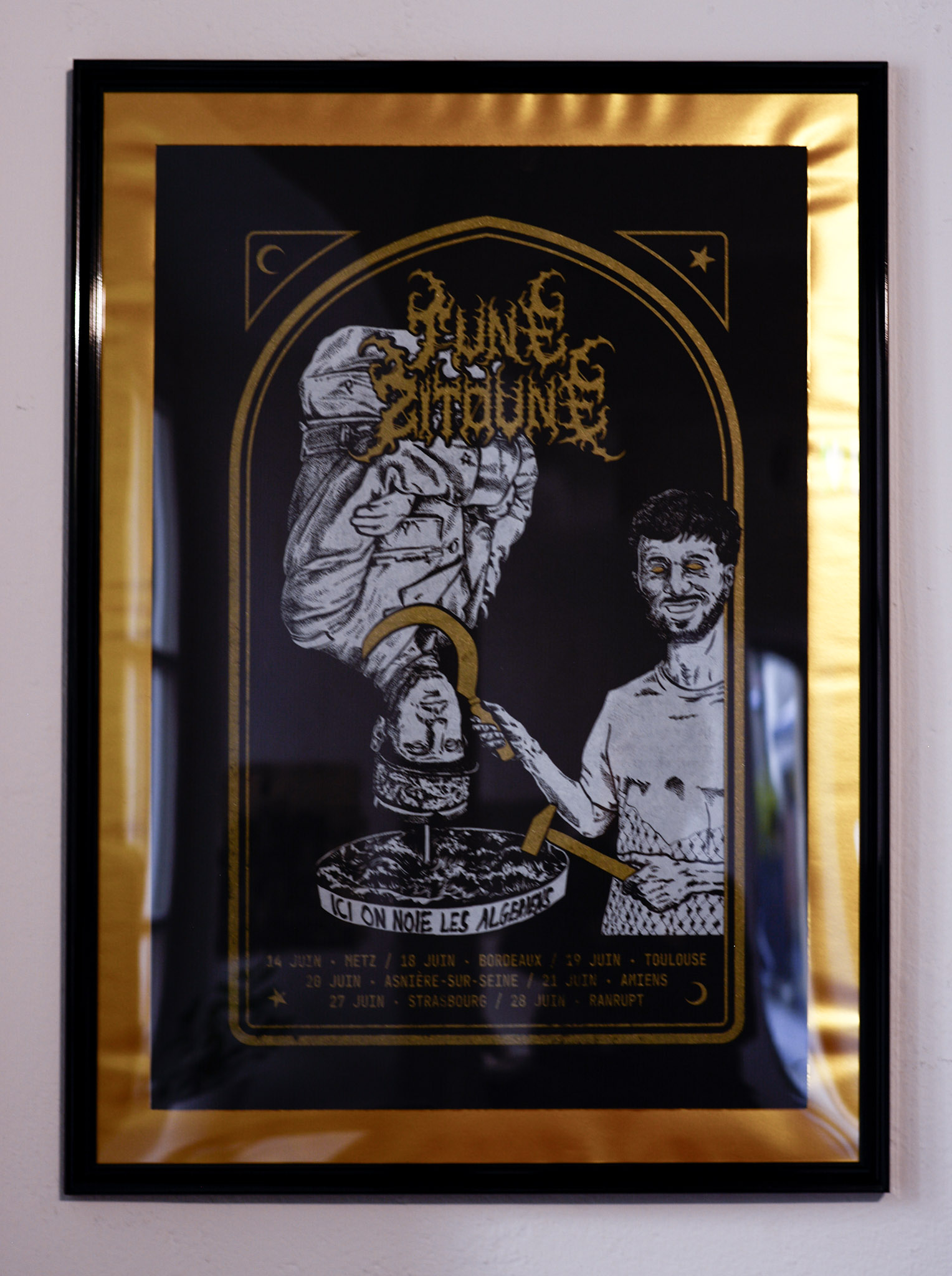
photo : Zohra Mrad
Zahira Attou
“ Music has always been one of the most important parts of my life. As I grew older and became more involved in nightlife and music scenes, it slowly became something I needed to be a part of. The energy of live shows, meeting like minded people, the freedom and emotional release within these spaces became deeply connected to the way I experience and approach art. Being part of these scenes while also designing for them allows me to create from a personal perspective rather than from the outside looking in.
My visual work is heavily inspired by the feeling of live music itself. I often begin by sketching while listening to music that fits the energy I want to create, later design those ideas digitally through collage, textures, scans and raw compositions. I try to reflect the intensity, movement and emotion of the music visually, creating work that feels immediate, expressive and alive. Working with collectives that actively create space for marginalized voices within alternative music scenes is especially important to me, because these communities continue to be overlooked even within underground spaces themselves. Designing for these projects feels like a way of contributing to and preserving the scenes that have shaped me. “ Zahira Attou
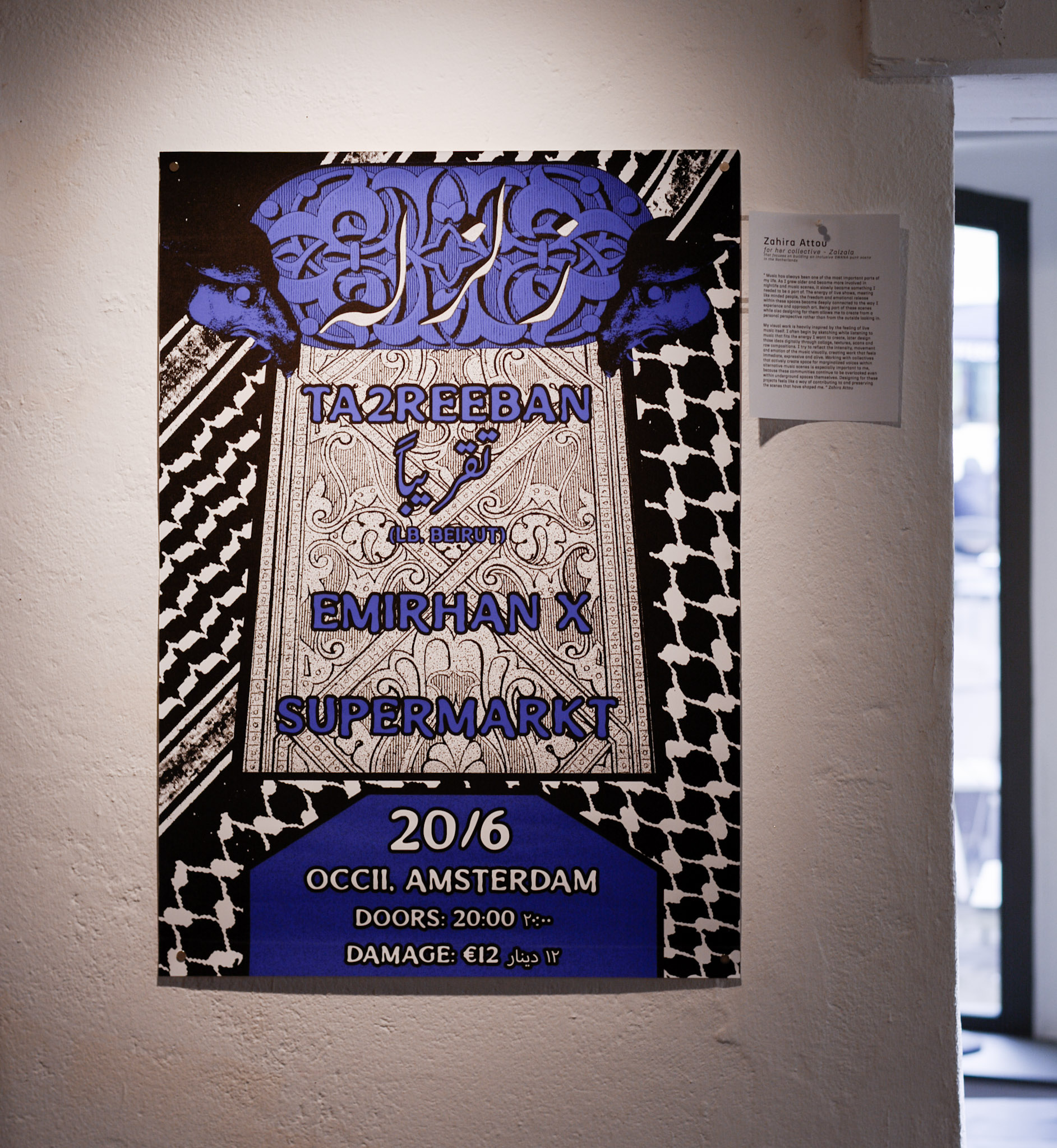
photo : Zohra Mrad
Alexandra Uppman
“ Metal music has been a constant, reassuring presence in my life since my early teens, when I first truly heard its resonant rhythms blasting from my big sister’s room. Born in Luxembourg but stemming from the Swedish speaking community in Finland, I often felt conflicted about belonging and homeland. The music and its community offered a refuge where I found a sense of belonging. Ever since, it has remained a steady force in my life, whether at large-scale metal festivals or small underground gigs.
Metal music, and perhaps more particularly leftist/apolitical Black Metal, deeply resonates with how I feel and experience the world: the pain and powerlessness of witnessing other’s suffering and the dramatic decline of the natural world and its ecosystems. Droning soundscapes accompany the profound melancholy I feel when confronting the ongoing loss of wildlife. My work takes root in these emotions, and the music is inseparable from my practice.
With Black Metal, the raw, distorted, decomposed screeching envelops me and helps me cope. When I listen, I often play a few tracks on repeat, absorbing them intensely; themes evolve constantly, mirroring the questions and challenges I’m working through at the time.” Alexandra Uppman
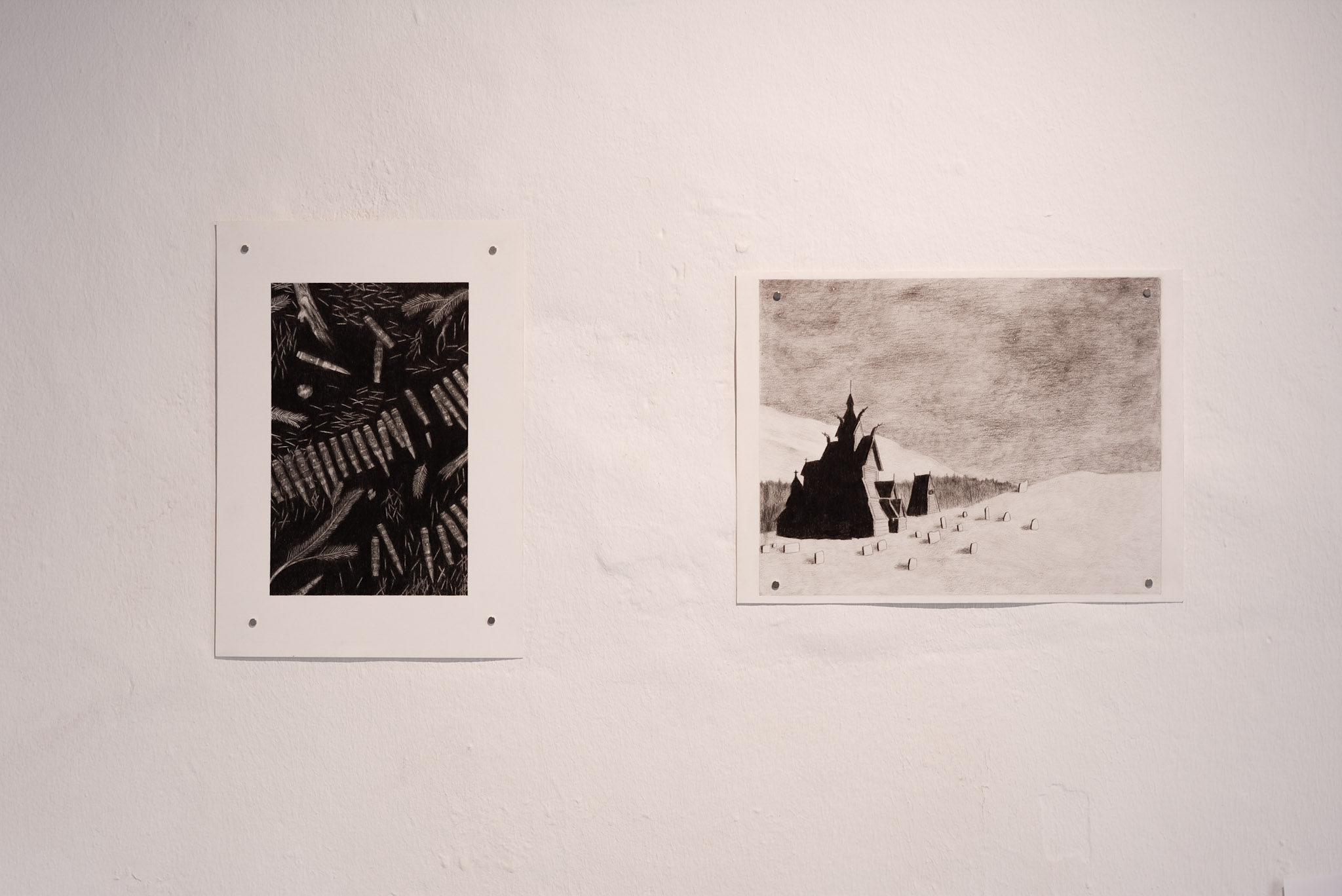
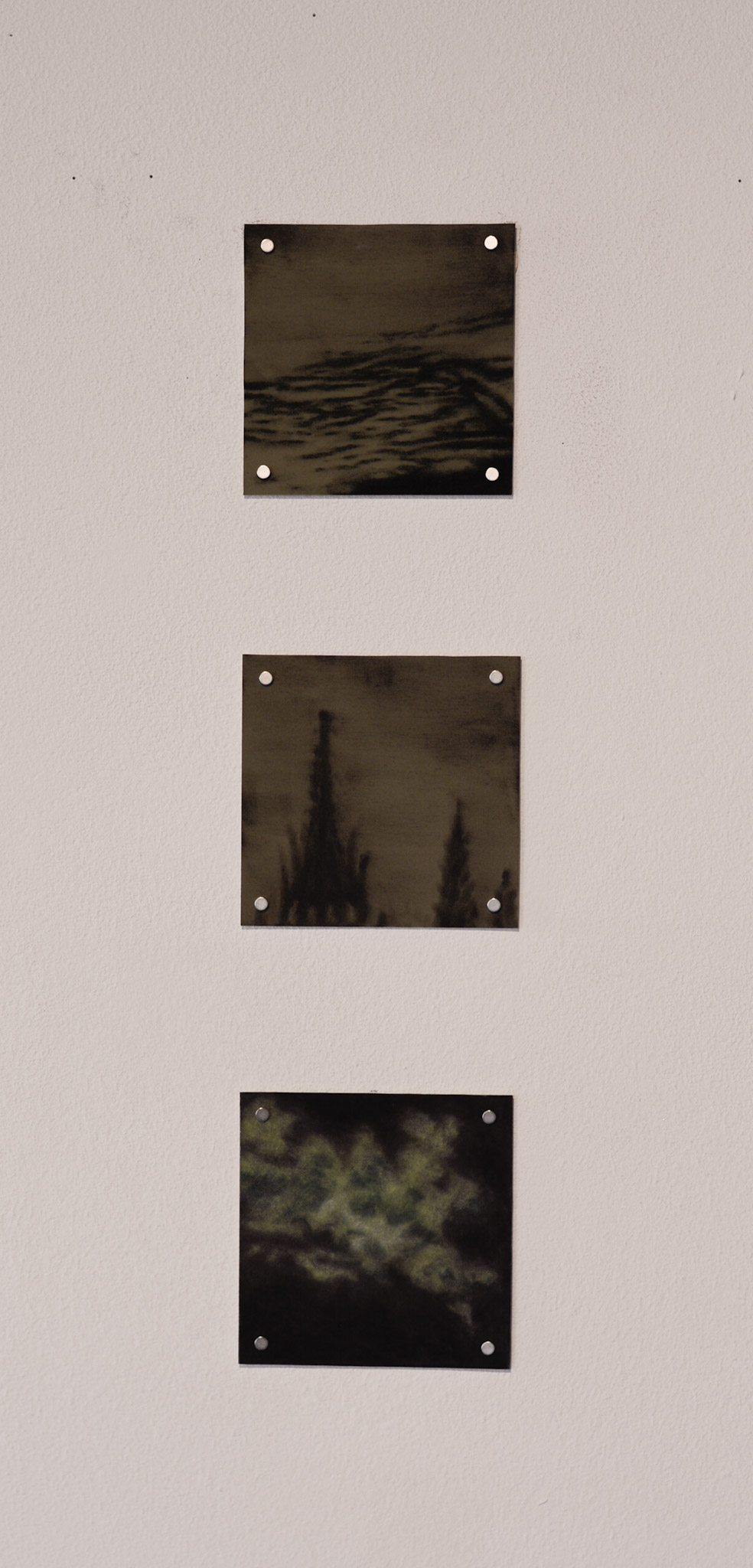
photo : Zohra Mrad
Michaela Knizova
In my earlier work, I frequently used self-portraiture and my own body to explore solitude, vulnerability, and forgotten or suppressed stories, often drawing on the symbolism of fairy tales, saints, and folk traditions.
Over recent years, my focus has gradually shifted from the body toward landscape. I approach land and natural environments as carriers of emotional, historical, and mythical traces, places that silently absorb human presence, absence, and projection. Working primarily with analogue and experimental photographic techniques, particularly black-and-white photography combined with scanning and reworking processes, I create alternative visual worlds that reflect on stillness, transformation, and the latent emotional qualities of place.
More recently, I have become interested in communicating my work through zines and self-publishing under the name Nynewe. My recent work has also become connected to research into Christian saints and mysticism, particularly female figures. Through exploring their symbolic universes, I search for secular patterns and contemporary emotional resonances.
“Penelope Trappes released her track Sleep in late 2024, accompanied by a gothic video made by Agnes Haus, in which she herself plays a sleep paralysis demon. The song is veiled in grief, speaking about the transition from sleep into death, release from suffering, and the confrontation with horror. When I started working on my first zine I’ve Been Waiting in This Silence a few months later, this song and video remained strongly in my memory. Diving into the universe of the track Sleep brought forth a tense and uncompromising confrontation.
Penelope Trappes was known for creating more gentle ambient music, but with the album A Requiem, she brought forward something far more ritualistic, filled with drones, pain, grief, and emotional surrender. In the early development phase of the zine and during the first sequencing of images, I was listening a great deal to the album Abyss by Chelsea Wolfe, with its play on the incubus phenomenon, but over time, Sleep became far more deeply tied to the zine itself.” Michaela Knizova
“ Seeing XTC in the XIV performing live was a special experience for me, I felt almost as if I were falling in love. Afterwards, I began reading more about their work and realised how perfectly it aligns with my research into mysticism, especially medieval female mystics.
My second zine Pain Is The Doorway, And Ecstasy The Flame enters mystical themes for the first time, drawing particular inspiration from Mechthild of Magdeburg and her deeply erotic perception of her relationship to Christ and other Christian entities.
I chose Salve Regina because of its historical and emotional weight. Originating in the 11th century, it is entirely possible that Mechthild herself would have known the hymn and perhaps even sung it. The text carries themes of longing, exile, suffering, and divine tenderness, ideas that echo strongly through mystical writing.
XTC in the XIV deconstruct the composition through looping, sampling, and ritualistic repetition, transforming the medieval hymn into something ecstatic and trance-like. The group describes their own practice as “ecstasy by repetition,” a phrase that feels closely connected to the emotional and devotional intensity found within medieval mysticism itself.” Michaela Knizova
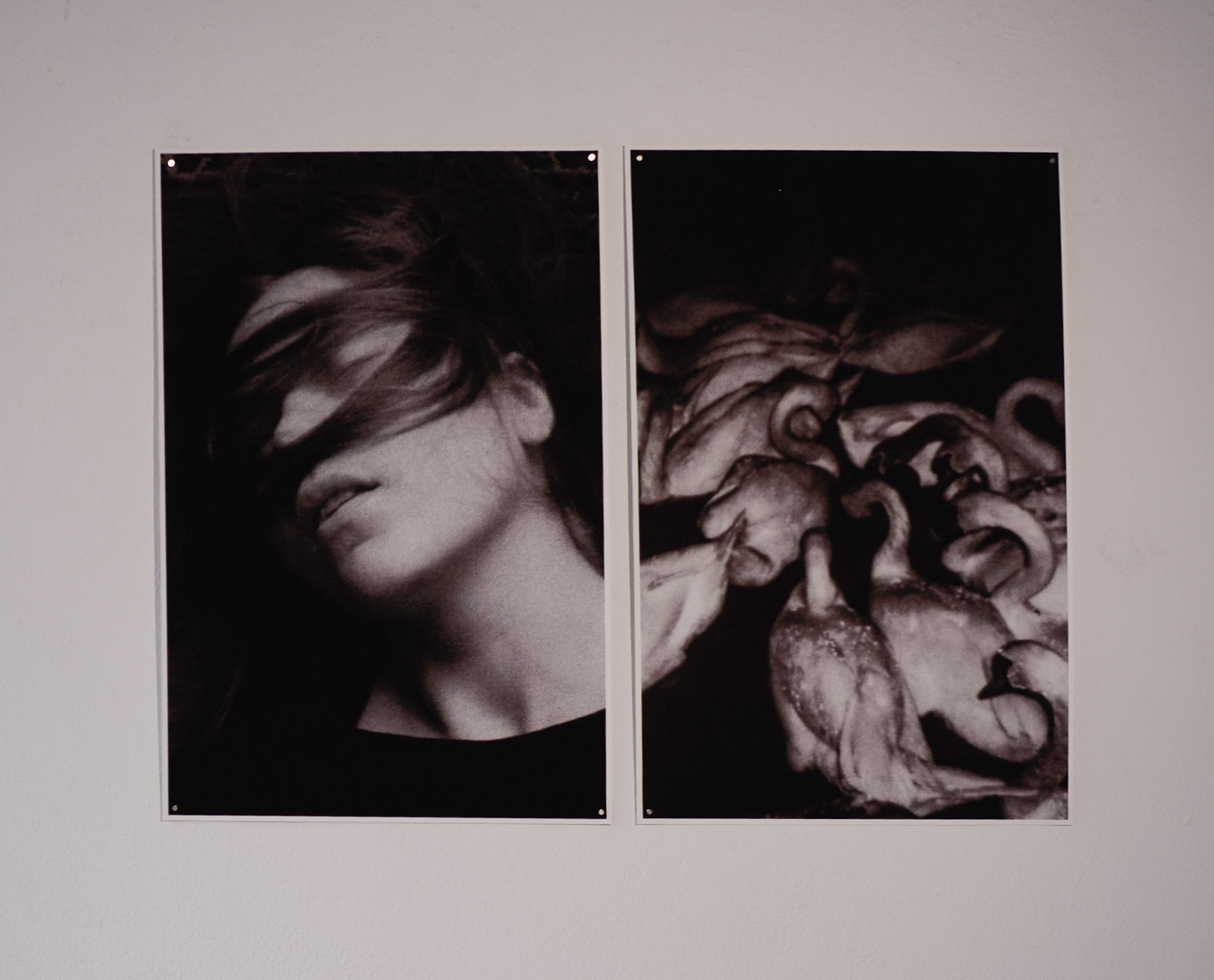
photo : Zohra Mrad
Mitch Fuse
He is a self-taught and active actor of the current luxembourgish noise and hardcore music scene. He plays guitar for post-punk and noise bands like Gofai and Ultra Nothing as well as making the images and merch accompanying them.
" I play guitar in Gofai and Ultra Nothing, two projects rooted in post-punk and noise, raw, unfiltered sound where structure and chaos constantly push against each other. The music leans into tension, distortion, and atmosphere, shaping much of how I approach my visual work.
Alongside that, I work as a tattoo artist, bringing the same direct and instinctive mindset into a more permanent medium.
This illustration, created as a T-shirt design for Gofai, reflects that crossover. It draws from the energy of the music, chaotic, layered, and immediate, while embracing an intentionally ignorant style. " Mitch
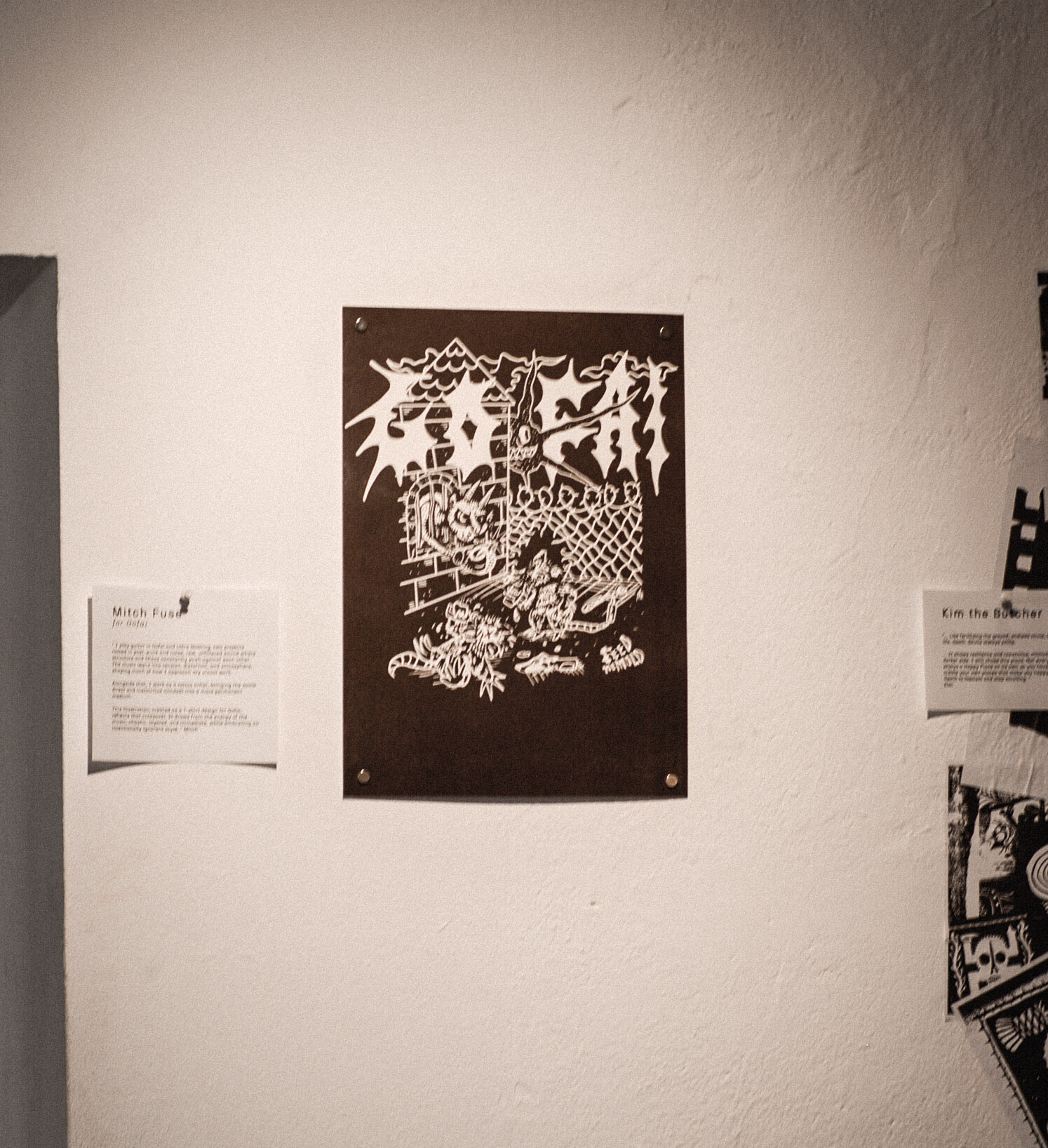
photo : Zohra Mrad
Zohra Mrad
Their approach is collaborative, circular and inclusive. Their artworks are often inspired and linked to kinesthesia, healing, chaos and the experimental and/or extreme music scene.
They question different ways we use to help us survive, remember and transcend the violence of the world around us.
"What a great idea was it to include myself in this exhibition and now I have to write a text" Zohra
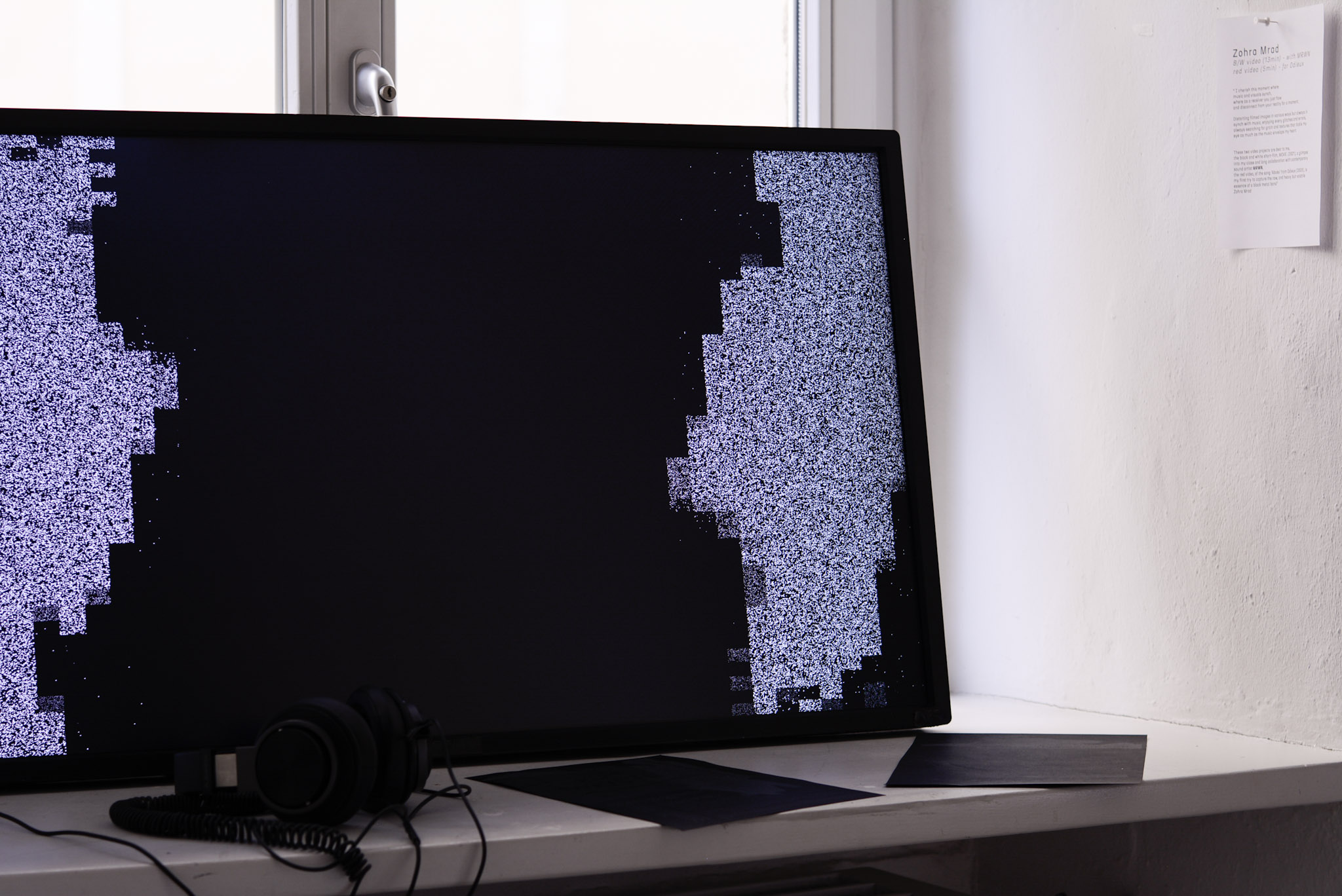
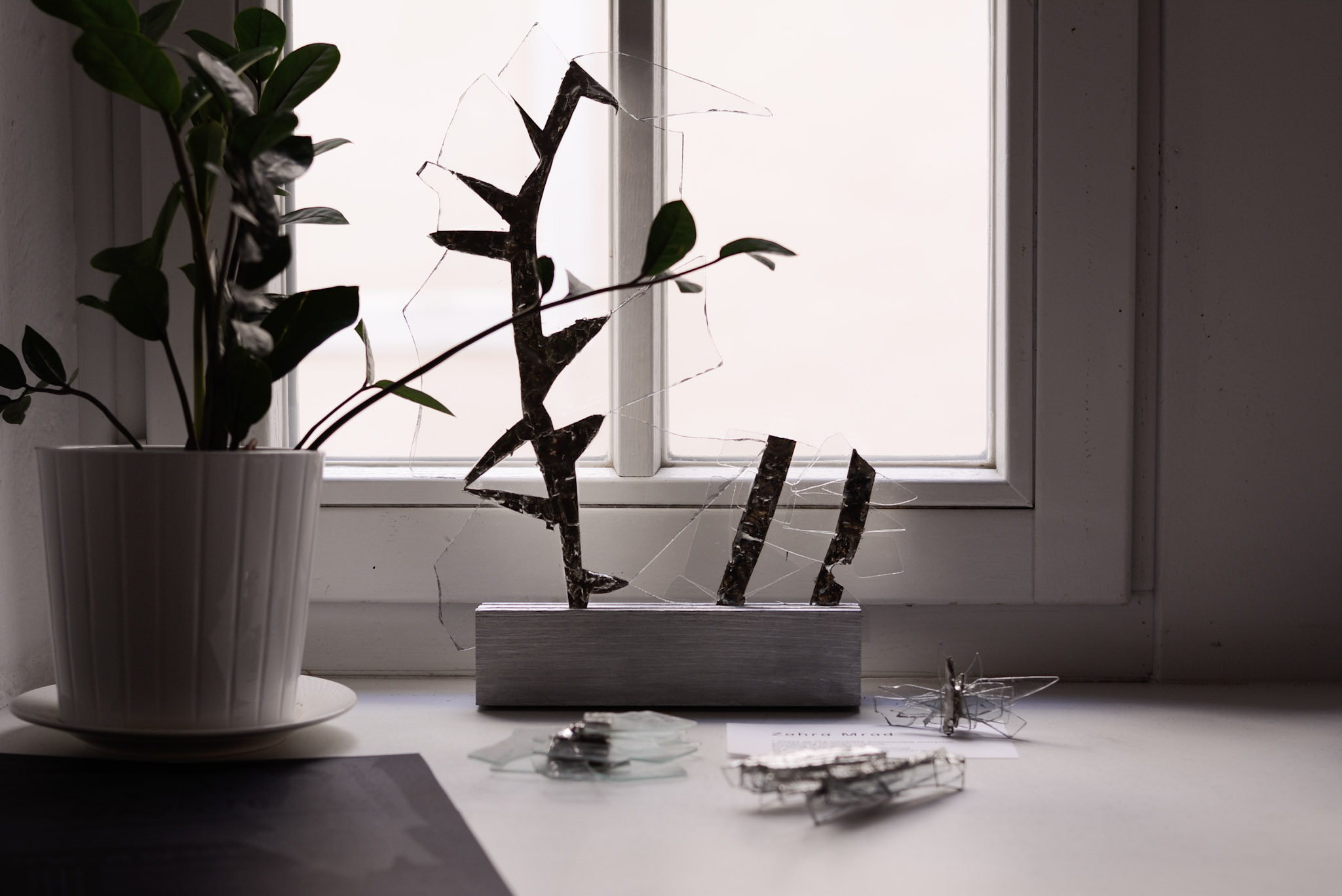
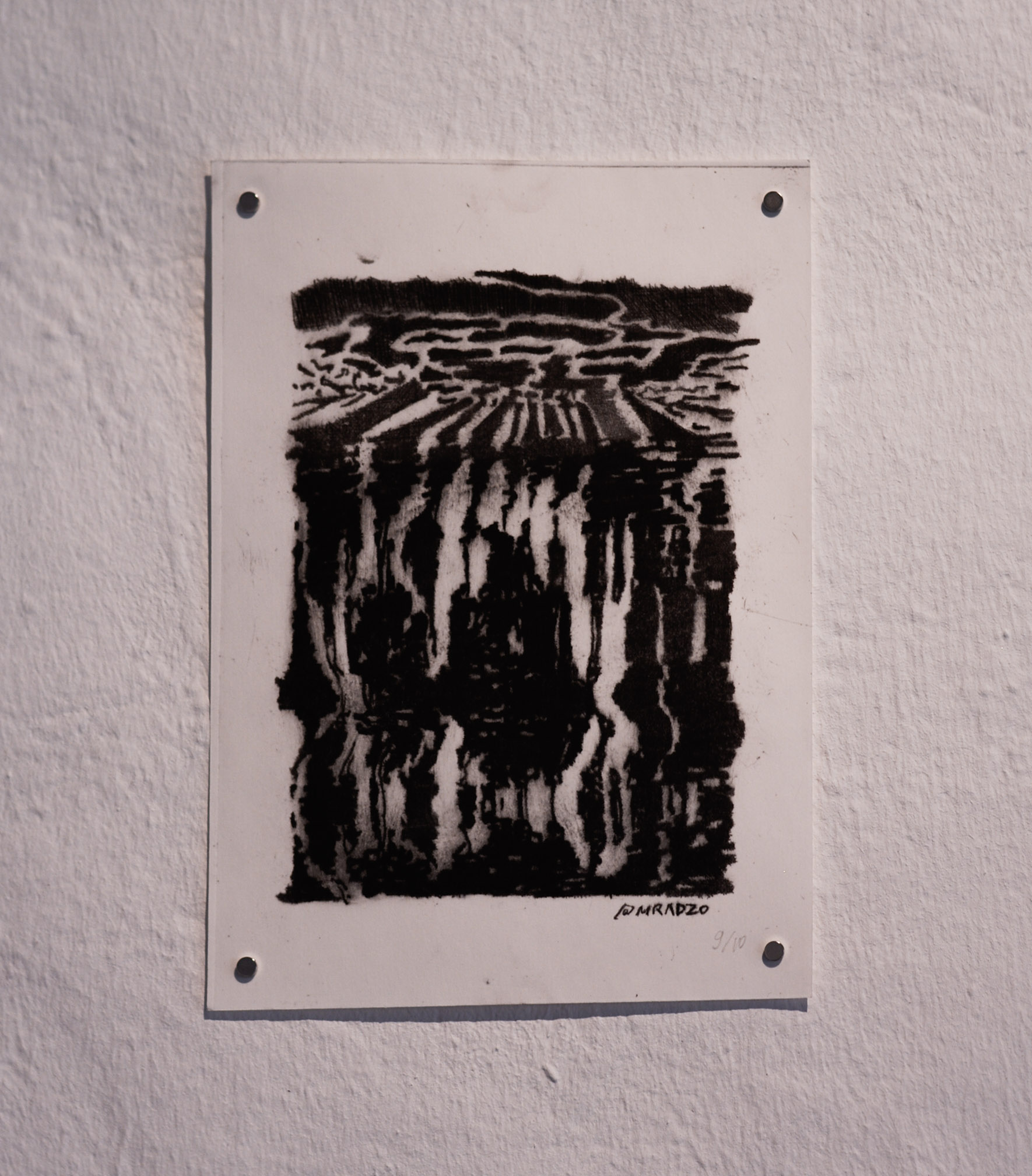
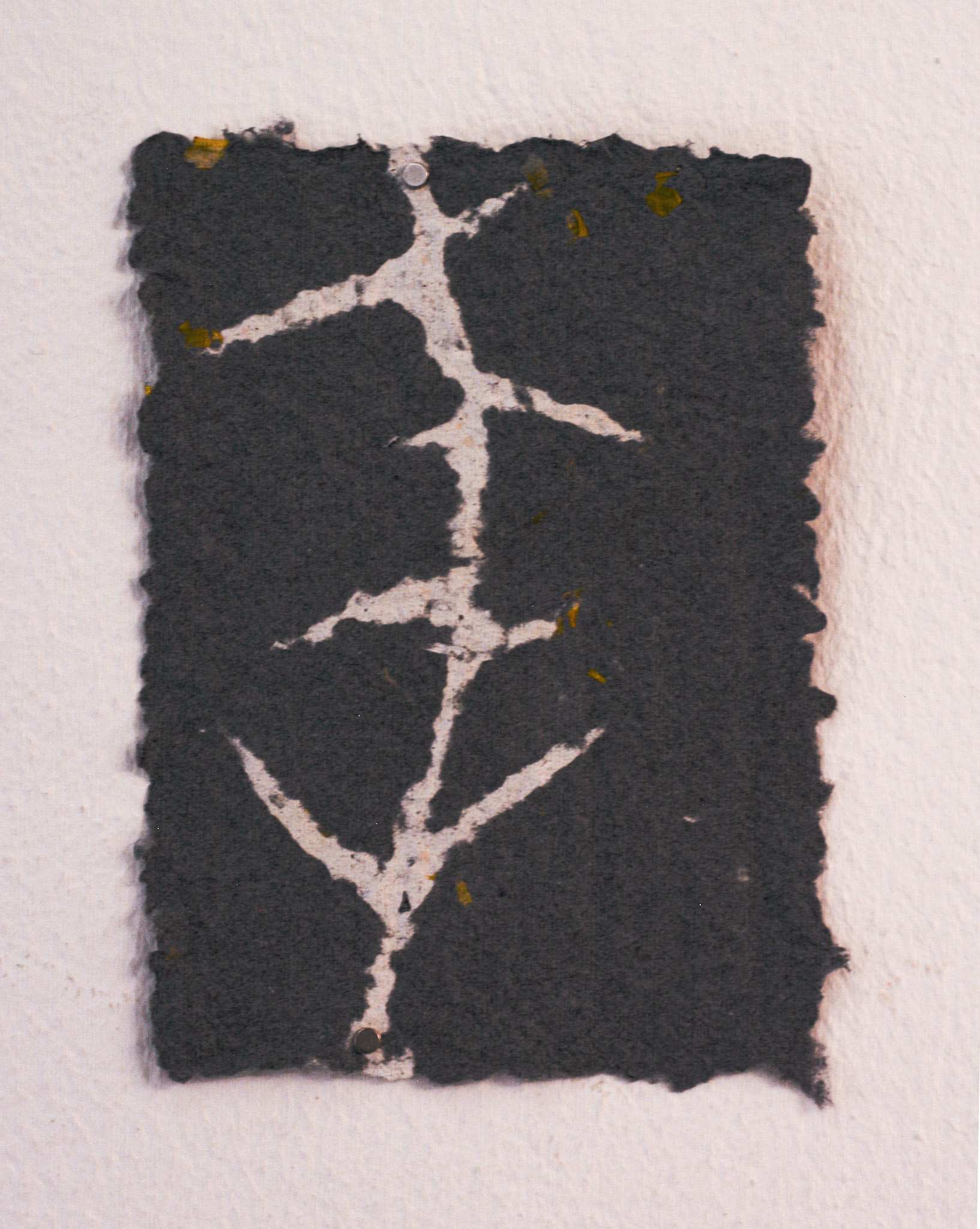
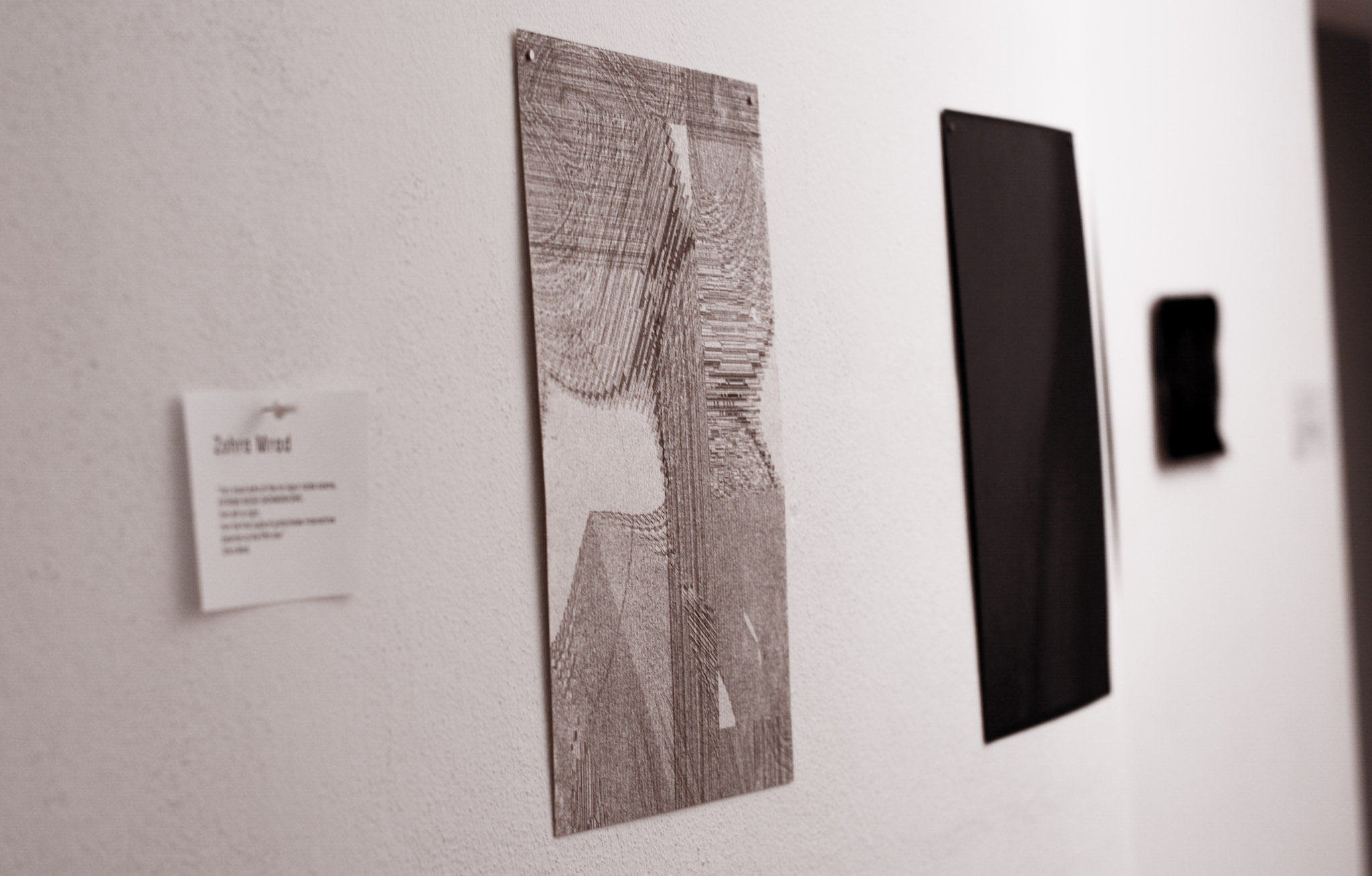
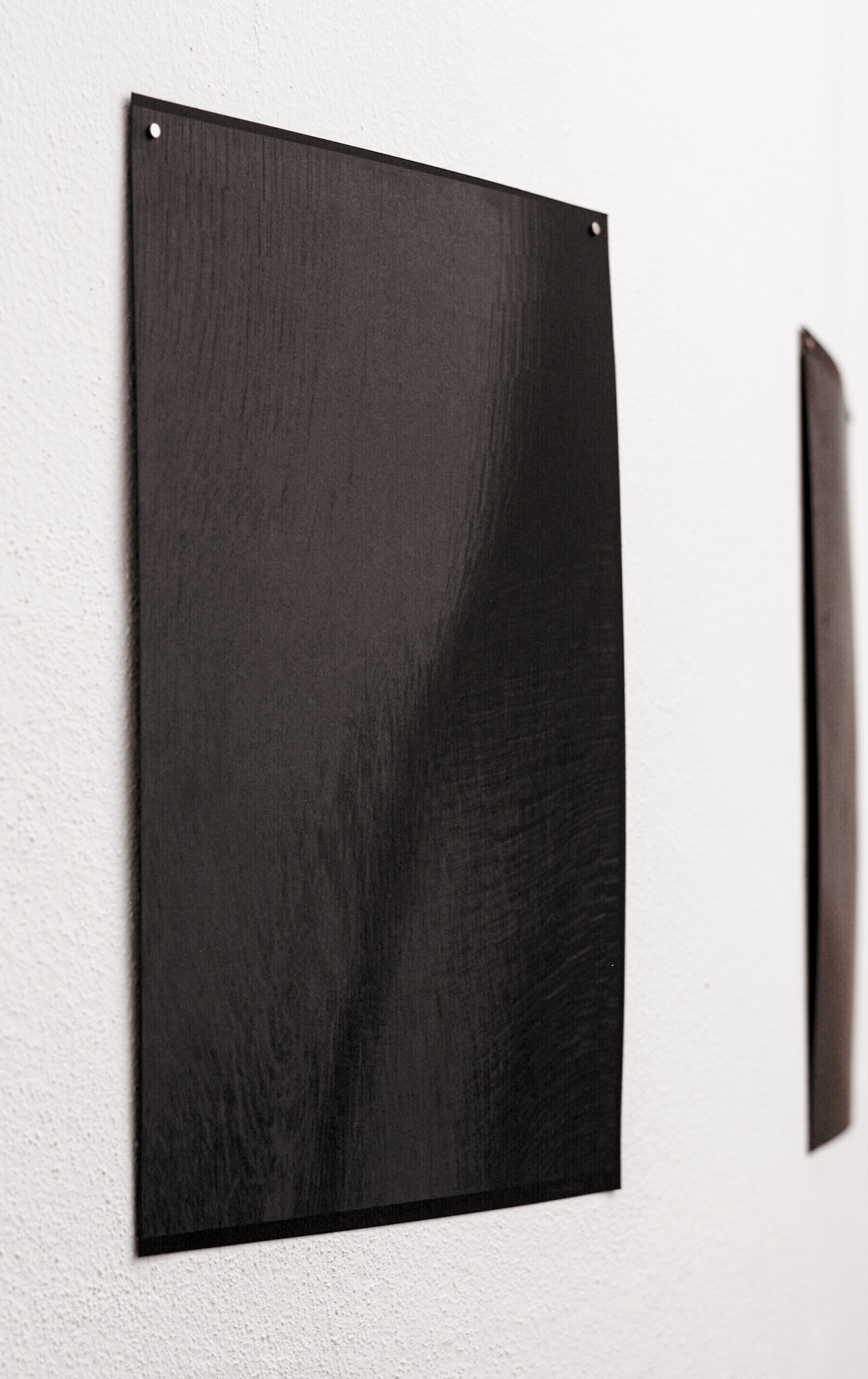
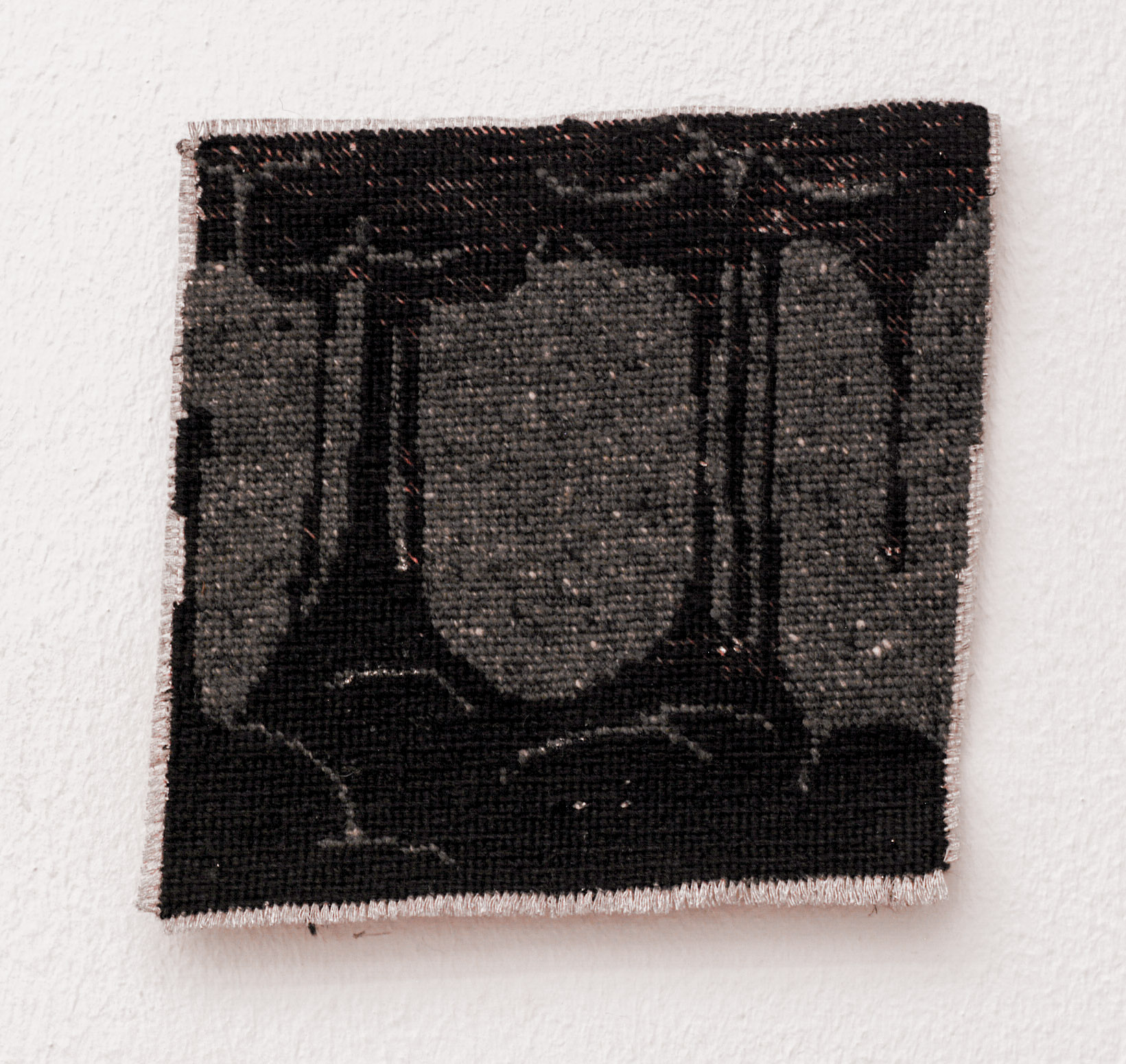
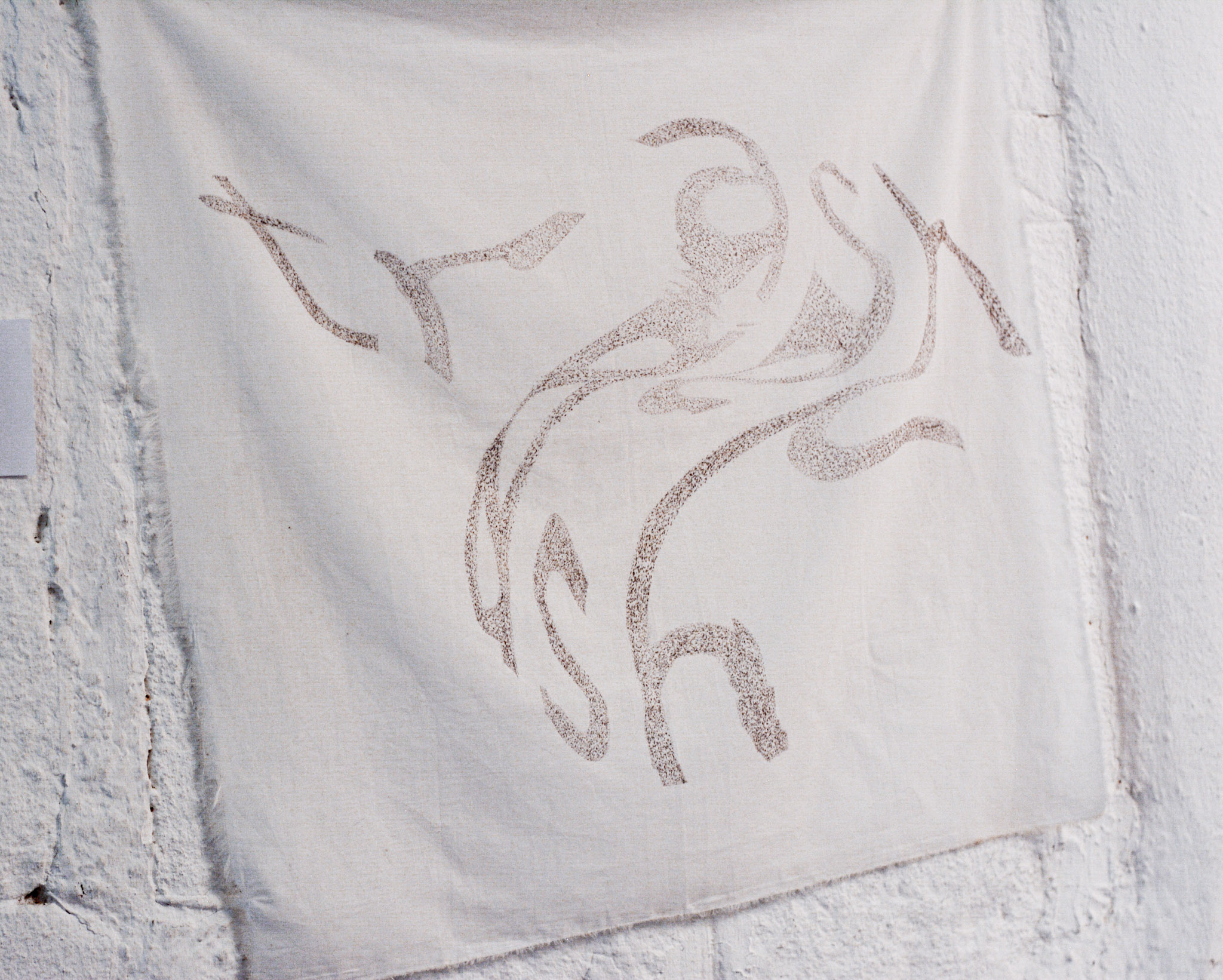
photo : Zohra Mrad